Project scope
Training of trainers for AFSeN and its stakeholders, delivered for FAO Afghanistan in Kabul on 7–8 and 11–12 July 2021, covering climate risks, resilient agriculture and gender-responsive planning.
Search the website
Type at least 2 characters to see results.
Searching…
No results found. Try another keyword.
Training of trainers for AFSeN and its stakeholders, delivered for FAO Afghanistan in Kabul on 7–8 and 11–12 July 2021, covering climate risks, resilient agriculture and gender-responsive planning.
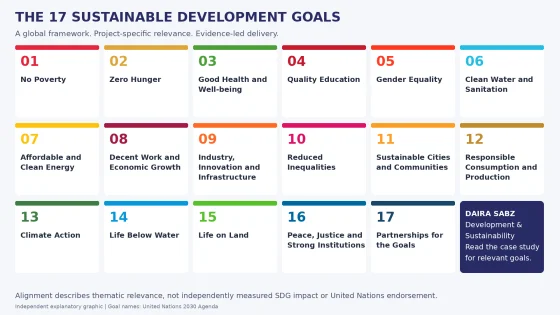
Daira Sabz’s CEO signed the agreement on behalf of the company to develop training materials, analyse participants’ knowledge before and after training, prepare the final report and provide recommendations for future capacity-building programmes. The training of trainers brought together AFSeN staff and stakeholders at the FAO Hall, Ministry of Agriculture, Irrigation and Livestock (MAIL), Kabul. Sessions took place on 7–8 and 11–12 July 2021. Relevant Sustainable Development Goals — SDGs 2, 4, 13. FAO trainer development in Kabul combined climate-smart agriculture materials, facilitation, pre/post knowledge assessment and recommendations for future capacity building. This is thematic alignment with the documented assignment, not independently measured SDG outcomes.
Climate change science, causes and impacts, including past trends and future scenarios in Afghanistan. Implications for agriculture, food security and nutrition, and their integration into planning and policies. Climate-smart agriculture strategies for sustainable production and incomes, adaptation, resilience and greenhouse-gas mitigation. Gender-responsive policies and the roles of women and men in climate adaptation and mitigation. Recommendations and climate-smart interventions for Afghanistan’s agricultural sector.
Training of trainers for AFSeN and its stakeholders, delivered for FAO Afghanistan in Kabul on 7–8 and 11–12 July 2021, covering climate risks, resilient agriculture and gender-responsive planning.
Daira Sabz used a practical and standards-based delivery approach:
Agricultural institutions and practitioners needed practical knowledge to integrate climate risks, climate-smart agriculture, food security and gender considerations into planning. Translating climate science into applicable learning for future agricultural interventions was a core capacity-development challenge.
Daira Sabz supported FAO Afghanistan through a structured Training of Trainers for AFSeN staff and stakeholders, combining training materials, facilitated sessions, pre- and post-training knowledge assessments, technical reporting and recommendations for further institutional learning.
The assignment delivered training and a documented learning-assessment process, together with recommendations to inform future capacity-development programmes and climate-responsive agricultural planning. No independently verified livelihood or climate outcomes are claimed.
This assignment demonstrates institutional capacity development through scalable training-of-trainers approaches. Daira Sabz has consistently designed and delivered learning programmes that build evidence-based capacity across agricultural institutions. No independently verified outcomes are claimed — only the documented process of capacity-building through ToT, learning assessment, and institutional reporting. Relevance to Future International Assignments: This experience is directly applicable to climate-resilience and agricultural-extension programmes, ToT and cascade training, gender-responsive capacity development and evidence-based learning for development agencies, government institutions and NGOs, adapted to local context and languages.
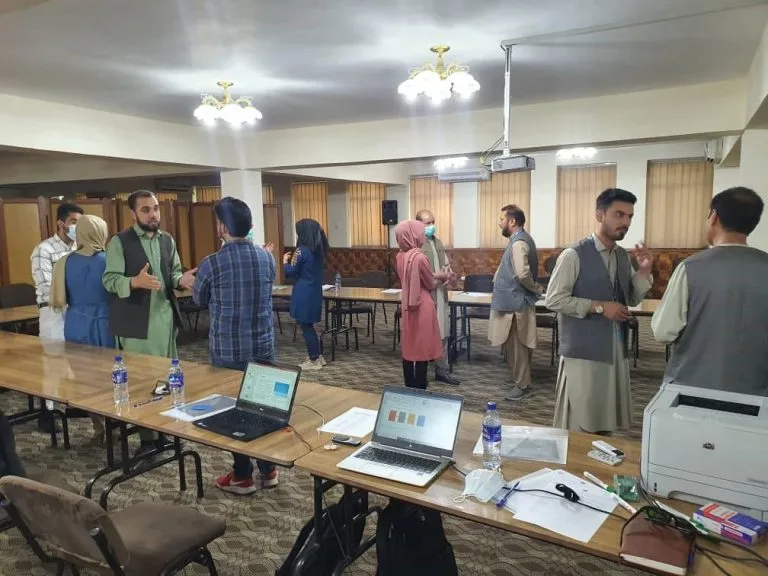
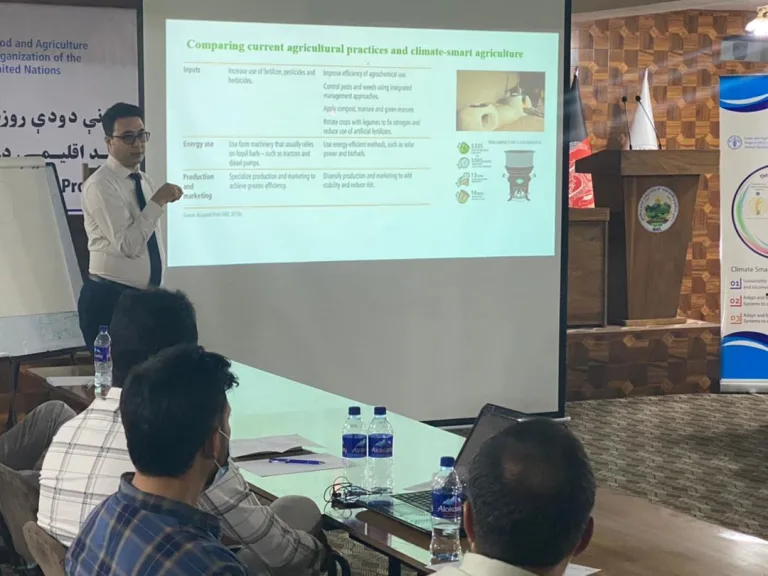
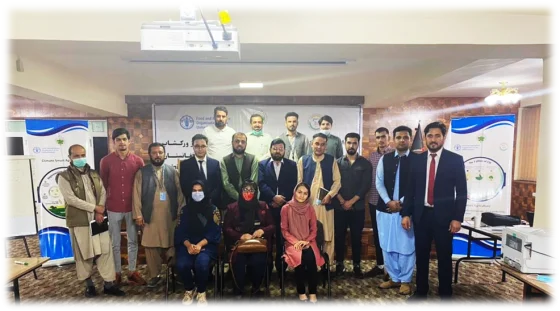
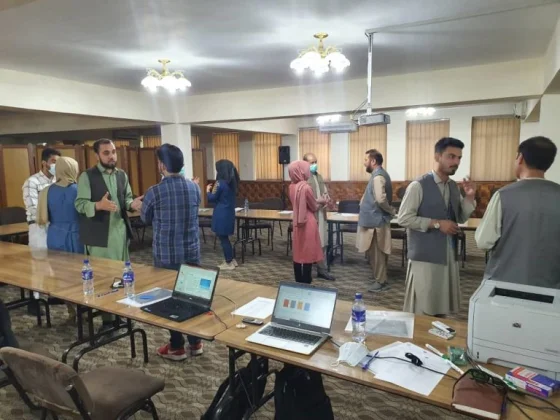
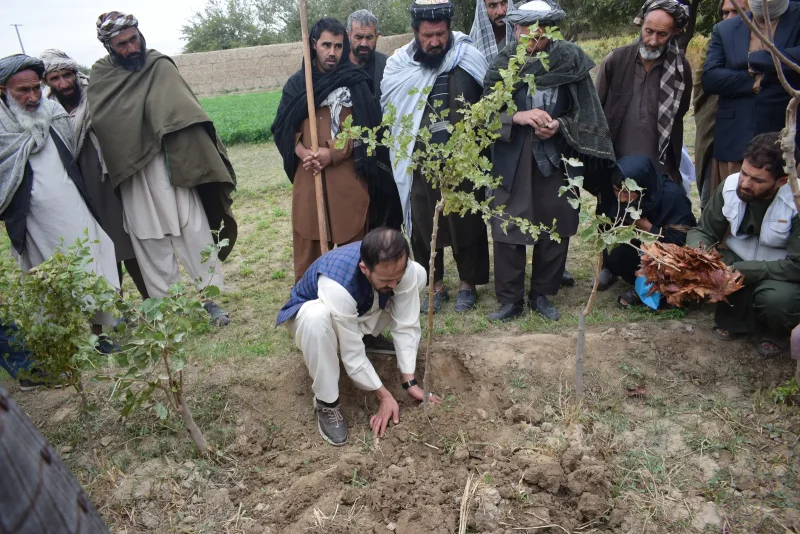
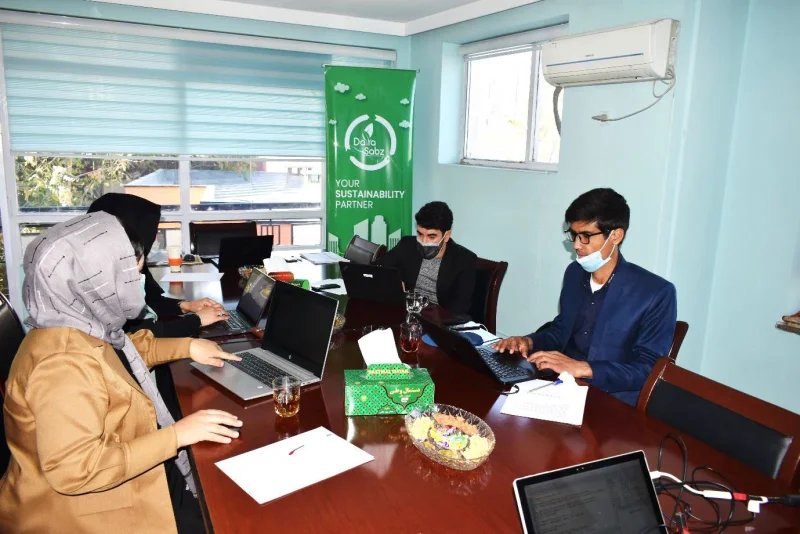
Participants, a facilitator presentation and peer discussions during the FAO climate-smart agriculture training of trainers in July 2021.
 Climate & Agriculture
Climate-smart agriculture training for Norwegian Church Aid under PEARL–ABADEI 2.0: 105 training-of-trainers participants and 355 farmers across 16 districts, supported by manuals developed in English and translated into Dari and Pashto.
Kandahar, Zabul, Balkh, Helmand and Samangan — northern and southern Afghanistan
 Climate & Agriculture
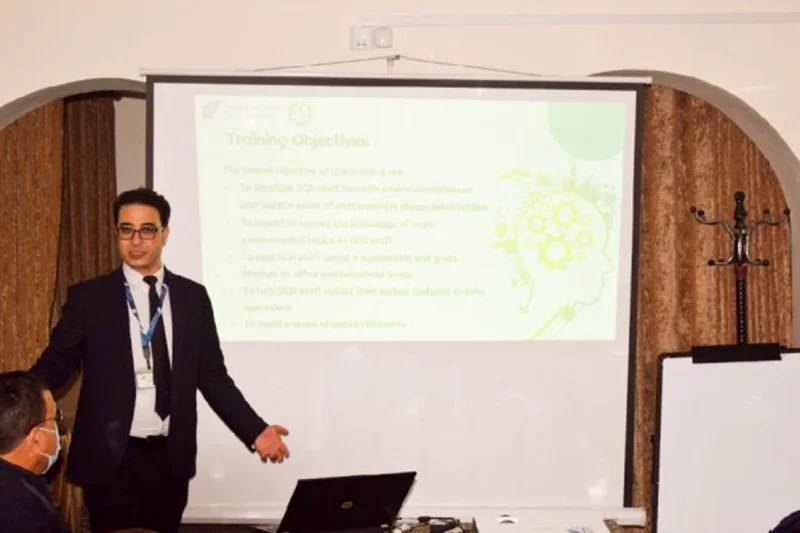
Institutional environmental capacity development for the Swedish Committee for Afghanistan across six locations, combining training materials, pre- and post-training assessments, facilitation, reporting and recommendations for future staff learning.
Kabul, Jalalabad, Ghazni, Wardak, Takhar and Mazar, Afghanistan
 Climate & Agriculture
Practical R and RStudio training for Caritas Germany’s Afghanistan office in Kabul, building skills in data preparation, analysis, visualisation and research interpretation, with relevance to data-driven monitoring and evaluation.
Kabul, Afghanistan
Whether you need a technical workshop, training-of-trainers programme, institutional learning package or community-based awareness initiative, Daira Sabz can develop a programme aligned with your audience, objectives and operating context.